
https://www.alength.com/echoes-of-the-summits-indigenous-harmony-and-mysterious-cultures-in-the-andes-and-tibetan-plateau/
In the deep valleys and mist-shrouded highlands of the Andes, ancient indigenous tribes and their deep connection with nature are hidden. This mountain range is not only the longest in the world, but also the cradle of some of the oldest cultures and civilizations. From the ancient Inca Empire to today’s indigenous Andean tribes, this mysterious land carries countless stories, telling the history of human beings and nature’s interdependence and coexistence.

Connected and isolated: the Andes Mountains are a natural barrier
The Andes Mountains stretch deep and meander across seven countries and across multiple climate zones. The unique geographical structure of the mountain range forms a natural barrier, and many indigenous tribes are relatively isolated from the outside world. However, this isolation has not led to their isolation, but has given them a deeper connection with nature and unique survival wisdom. For these people living deep in the mountains, the mountains are not only a geographical barrier, but also the foundation of their spirit, culture and way of life.
The lives of the indigenous peoples of the Andes have long been profoundly influenced by the mountains. The local natural landscape, climate change, and rich ecosystems shape their daily lives and culture. Through close interaction with nature, they have learned how to find space to survive in harsh environments. Whether it is the extreme cold of the plateau or the depth of the canyons, the indigenous tribes of the Andes always find their own way of survival in this “Land of Giants”.
Indigenous life wisdom: the integration of agriculture and land
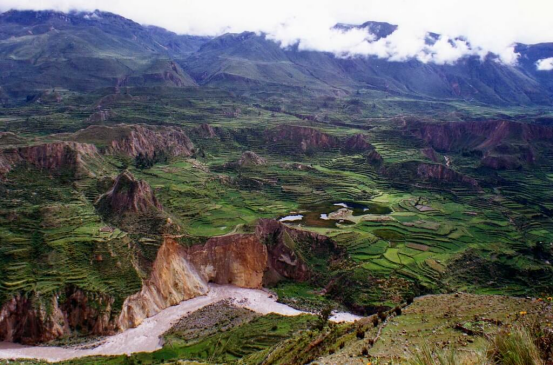
The combination of agriculture and the land of the Andean indigenous tribes often shows profound wisdom. In the high-altitude mountains, the soil is poor and the climate is harsh. Traditional agricultural planting methods are not suitable for such a complex environment. In order to cope with these challenges, the Andean people have developed unique farming techniques and planting patterns. They not only grow crops that adapt to cold and drought, but also use ingenious agricultural methods such as terraces to rationally utilize land resources on the hillside.
Among them, the most representative crop is the potato, which has long been a part of the local culture in the Andes region for thousands of years. In fact, the Andes Mountains are the birthplace of potatoes, and thousands of potato varieties are still grown here. In addition to potatoes, crops such as corn, quinoa, and millet are also well cultivated locally. Many indigenous tribes have strict farming cycles, and the annual sowing and harvesting are closely linked to the seasonal changes of the mountains and the cycles of the sun and the moon. This high sensitivity to astronomical and natural rhythms has given the Andean people extraordinary survival wisdom.
The indigenous tribes of the Andes are not only known for their agricultural techniques, but also for their mastery of water management. In some mountainous areas, the Andean people developed complex irrigation systems to ingeniously bring water to the arid highlands. By using stone channels and earthen dams, they were able to make the land on the hillsides fertile and support a larger population.

Myths and beliefs: The protection of natural spirits
The Andes Mountains are not only a physical home, but also a source of spirituality and faith for indigenous tribes. In these tribes, the elements of nature – mountains, rivers, sun, moon, wind, rain – are all regarded as the embodiment of gods. In particular, Viracocha, the sun god and creator god, occupies a supreme position in Inca civilization. For the indigenous tribes of the Andes, the mountains are the residence of the gods and the intersection of the sacred and the real.
These mountains and lands are not just physical existences, they also carry the cultural memory of the tribes and the souls of their ancestors. Every mountain, every river, and every forest seems to have its own myths and legends. In some tribal rituals, worshiping natural spirits has become an important way for them to maintain a harmonious relationship with nature. Through sacrifices and prayers, the Andean indigenous people expressed their respect and gratitude for nature, and also prayed for good weather and a good harvest.
For example, in some tribes, the snow-capped mountains of the Andes are considered the incarnation of gods, and they hold regular sacrifices to thank the snow-capped mountains for providing water and protection. This belief not only allows indigenous tribes to rely on nature in material terms, but also to be closely connected with nature in spirit. For the Andean indigenous people, every existence in nature has its spiritual and sacred meaning, which is one of the reasons why they can survive in such an extreme natural environment.

Challenges: Conflict between modernization and nature
With the progress of modernization, the lives of indigenous tribes in the Andes are undergoing tremendous changes. External development, urbanization and climate change are gradually affecting the traditional lifestyles of these tribes. Many traditional agricultural methods are being replaced by modern technology, and the impact of foreign cultures is also challenging their traditional beliefs and culture.
Especially today, with climate change becoming increasingly severe, indigenous tribes in the Andes are facing unprecedented survival pressure. Global warming has caused glaciers to melt, droughts to increase, and the reduction of water sources has brought great difficulties to the tribes in these mountains. Traditional water conservancy irrigation systems and agricultural methods can no longer cope with environmental changes, and many tribes have to find new ways to survive.
However, faced with these challenges, the indigenous tribes of the Andes have not given up. They still maintain a close connection with nature and try to combine modern technology with traditional wisdom to cope with future uncertainties. For example, some tribes have begun to restore the natural ecology through sustainable agricultural practices and ecotourism, and seek cooperation and exchanges with the outside world.

Conclusion: Symbiosis between Man and Nature
As the guardians of this ancient land, the indigenous tribes of the Andes have long maintained a harmonious symbiotic relationship with nature. Their wisdom, beliefs, and lifestyles all deeply reflect how humans find a balance with nature in an extreme natural environment. Despite the many shocks brought about by modernization, the indigenous people of the Andes have always adhered to the concept of symbiosis with nature. Their stories remind us that the relationship between man and nature is far more than just survival, but also a spiritual connection and cultural inheritance.
As the world enters a more connected era, perhaps we can draw some wisdom from the lifestyle of the Andean indigenous tribes and rethink the relationship between man and nature, and man and land. Perhaps it is the existence of these tribes that makes us realize that nature is not only a resource for human beings, but also our common home and the foundation of our culture, life and soul.
https://www.alength.com/echoes-of-the-summits-indigenous-harmony-and-mysterious-cultures-in-the-andes-and-tibetan-plateau/