

https://www.alength.com/echoes-of-the-summits-indigenous-harmony-and-mysterious-cultures-in-the-andes-and-tibetan-plateau/
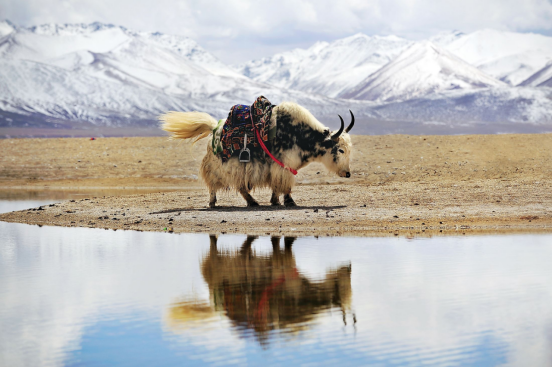
The Qinghai-Tibet Plateau, known as the “Roof of the World” and the “Third Pole of the Earth”, is the highest place on Earth with its majestic terrain and harsh cold climate. Imagine that in this area, the average altitude is as high as 4,500 meters, and the highest point is Mount Everest at 8,848 meters – a giant like the top of the earth. But this vast plateau is not only a stunning natural landscape, but also a place where countless cultures and beliefs are intertwined.
However, despite the rich natural resources of the Qinghai-Tibet Plateau, the fragility of its environment is often overlooked. Due to its high altitude and cold climate, the ecological recovery capacity here is relatively poor. With global climate change, the retreat of glaciers and the aridification of land are becoming more and more serious. Can this once beautiful plateau maintain its purity and uniqueness? This is a question worth pondering.
This beautiful and harsh plateau is the cradle of the integration of Tibetan culture and natural environment. Surrounded by mountains, deep canyons, dotted with deserts, grasslands and river valleys – these diverse natural landscapes have not only shaped a unique ecology, but also given rise to completely different cultures and traditions. In this mysterious land, Tibetan religion and customs continue to evolve in their relationship with nature.

Tibetan culture: isolation or communication?
Perhaps you have heard that Tibet is an isolated island. But is it really so? Although this plateau is surrounded by majestic snow-capped mountains and towering peaks, it seems difficult for outside visitors to approach it. However, its history is a vast symphony, full of the intersection and collision of different civilizations.
In fact, Tibet is not completely isolated. It is not only an isolated island in terms of natural geography, but also an important node on the Silk Road. The Tibetan Empire in the 7th century developed in this cross-cultural exchange. The foresight of King Songtsen Gampo promoted the spread of Buddhism and made Tibetan culture flourish from this starting point. No one would have thought that this seemingly “closed” region had a profound cultural exchange with great civilizations such as India and the Tang Dynasty hundreds of years ago, which contributed to the unique development of Tibetan Buddhism.
However, why is this cultural exchange in Tibet rarely mentioned? Is it because its far-reaching impact is often overlooked, or is it because the ancient stories in the mountains and valleys are still not fully understood by the world?
The History of Tibet: From Isolation to Integration
The history of Tibet, especially during the reign of Songtsen Gampo in the 7th century, marks a great cultural and political change. Before that, Tibet was a region of numerous tribes that did not rule each other. There was limited communication between the tribes, and although they lived together on the plateau, their beliefs, customs and languages were not unified.
The emergence of Songtsen Gampo changed all this. Through his marriage to Princess Wencheng of the Tang Dynasty and his cooperation with a Nepalese princess, Buddhism was introduced to Tibet. Buddhism is not just a religion, it is a cultural bond and a force that has profoundly influenced the political, artistic and social structure of Tibet. Under the promotion of Songtsen Gampo, Tibet not only achieved unification, but also entered a new historical stage: the golden age of Tibetan culture.
During this period, Tibetan architecture, literature, and the translation and creation of Buddhist classics reached their peak. The birth of Tibetan is an important witness to this historical process, which firmly engraved the cultural identity and spiritual world of Tibet on this land.

The profound influence of Buddhism: from faith to life
The arrival of Buddhism was undoubtedly a major turning point in Tibetan history. Starting in the 7th century, Buddhism gradually permeated all aspects of Tibetan society and changed the spiritual world and lifestyle of Tibetans. Many Tibetans see Buddhism as a path to enlightenment, which not only teaches people how to live in harmony with nature, but also teaches people how to deal with the impermanence and suffering in life.
The influence of Buddhism goes far beyond the religious level. It brought about changes in art, especially in the prosperity of thangka painting and sculpture. Buddhist temples such as the Jokhang Temple became spiritual and cultural centers, and their architectural style reached its peak during this period. The Jokhang Temple in Lhasa, with its golden roof and white walls, is still a symbol of Tibetan Buddhism.
It is worth noting that Buddhism is not only a guide to faith, but also deeply penetrates into the daily life of Tibetans. From the way of worship to the cooking of food, from the choice of clothing to the design of residence, every detail reveals the imprint of Buddhist culture.
The heart of Tibetan culture: an interweaving of tradition and art
If you are lucky enough to see the traditional architecture of Tibet, you may feel the power of harmonious coexistence with nature. Tibetan architecture, whether it is a magnificent temple or an ordinary house, is a work of art that is closely connected with the environment and the spiritual world. Especially the temples, they are not only religious holy places, but also the crystallization of art and culture.
The Jokhang Temple in Lhasa attracts thousands of tourists and pilgrims with its intricate design and unparalleled religious significance. The Tibetan dwellings show their ingenious functionality in the harsh winter. The thick walls, small windows and fluttering prayer flags on the roofs all tell how the Tibetans stick to their beliefs in the face of natural challenges.
But have you ever thought that behind these seemingly simple buildings are hidden deep cultural roots and religious symbols?
The influence of Buddhism on Tibetan mythology
Buddhism not only changed the religious landscape of Tibet, it also profoundly influenced Tibetan folklore and mythology. Buddhist teachings, such as “compassion”, “impermanence” and “reincarnation”, have gradually been integrated into the Tibetan mythology system. Many folklore still extol these core Buddhist concepts.
For example, Avalokitesvara (also known as Guanyin) is a symbol of compassion in Tibetan Buddhism, and her stories often appear in Tibetan folk myths. These myths are not only a manifestation of faith, they also reflect the Tibetan people’s profound understanding of life, the universe and existence.
Conclusion: The Living Tradition of Tibetan Folklore
Tibetan myths and legends are still alive and well in modern society. These stories are constantly adapted and passed down, from literature to film, and they continue to touch the hearts of contemporary audiences. Have you ever wondered why these ancient Tibetan legends are still so relevant today?
They are not only relics of history, but also an important part of Tibetan cultural identity, carrying profound wisdom and human emotions. In today’s globalized world, more people are beginning to pay attention to and explore these myths, which will become a bridge for cross-cultural understanding and dialogue.
https://www.alength.com/echoes-of-the-summits-indigenous-harmony-and-mysterious-cultures-in-the-andes-and-tibetan-plateau/